
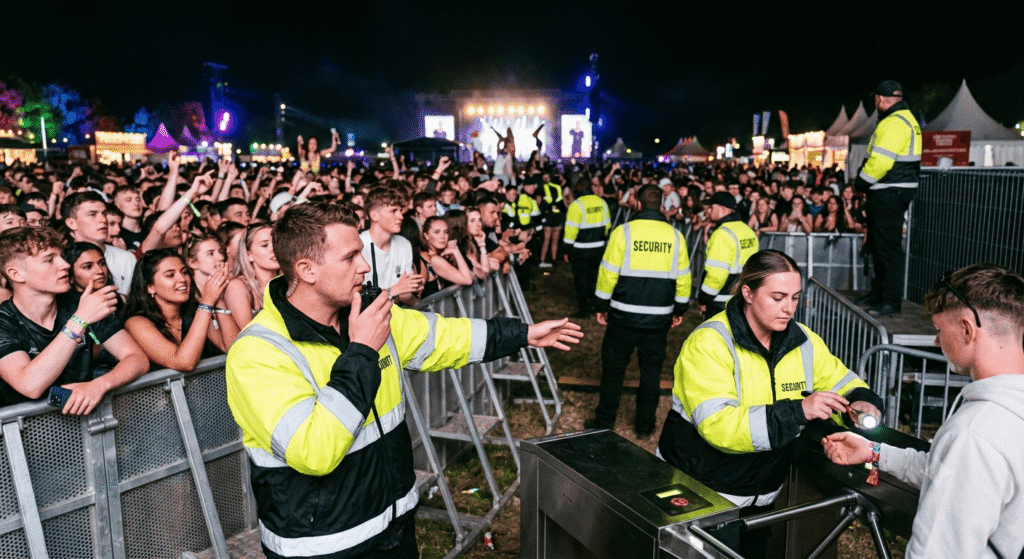
Organizing a successful event involves more than merely choosing a venue, mailing invitations, and hiring the performers. Security is an important factor in successfully arranging an event. Organizers should consider security measures whether they are planning a corporate party, music festival, private event, sports event, or community event. When a professional security service is hired for the event, organizers can be sure about safety and concentrate on other aspects of event organization.
The following are the seven ways total security services facilitate the safety of an event.
1. Controlling Attendance and Preventing Uninvited Guests
Monitoring the entry of people into the event space is essential for several reasons. First, unwanted visitors should be prevented from attending the event. Second, unwanted guests may cause disturbances. Finally, unauthorized individuals may enter prohibited places. The security team should be involved in the process of ticket selling, invitation verification, guest list checks, and visitor escort.
Managing access is crucial for any corporate party, private gathering, and ticketed events, where management wants to restrict access to only guests. Proper access management allows supervisors to detect potential threats before they can become serious. Clear access patterns help avoid confusion and eliminate crowding at the venue entrance.
2. Safeguarding Attendees from Issues and Problems
Big events bring together people from diverse cultures, backgrounds, attitudes, and expectations. Occasionally, during the event, disagreements may arise that cause problems and conflict. Security personnel must learn to interpret the early signals of problems and prevent them from escalating into bigger issues.
Event Security management focuses on keeping conflict and problems to a minimum through observation of the situation and communication with involved parties. If conflict arises, security personnel must act by separating involved parties and informing the event organizer about the situation.
This makes it possible to avoid unnecessary conflict while continuing with the event. If the situation calls for further action, security personnel will be able to contact responsible authorities as needed.
3. Safety of Employees and Event Staff
Employees in the event industry usually work night shifts and do hard work like assisting guests, providing food services, controlling events, and managing the crowd. Safe working conditions lead to efficient performance by the employees.
Skilled security staff can monitor restricted areas, secure equipment rooms, control access to backstage, and respond to employees’ complaints about suspicious actions or dangerous situations. They also assist employees when leaving the site, especially in case of late-night work. The presence of Security Guards creates confidence in safety for employees and helps event managers work out the formal reporting procedure in case of any issues.
4. Crowd Management and Crowd Control
Crowd management assumes an increasingly important role in environments where concerts, festivals, sporting competitions, and many other large attractions are involved. Crowds blocking exits and pathways, and thus constricting themselves around exits or busy areas, may prove to be a dangerous recipe. The security team helps keep the guests to their required areas where they are supposed to walk, helps in the streamlining of entry points, and ensures that they do not gather visitors all at one point. Provide support to venue staff in directing attendees toward alternate entrances or less populated areas.
It is vital to plan well in advance for effective crowd management. Organisers need to be aware of the likely maximum capacity of the venue, the available emergency exits, and the best practice procedures for sudden changes in crowd behavior. These measures, it is found, will minimize avoidable risks and favor a better experience for any guest.
5. Arrangements should be made to protect property, equipment, and valuable belongings.
High-end loudspeakers, video projectors, computers, screens, and personal belongings of any staff and attendees are valuable assets for any entertainment business. Thus, it is crucial to secure them against damage, theft, unauthorized access, and other potential issues.
Security personnel can protect those dangerous sections of events, monitor the secured area, restrict access to the areas where property is kept, and report suspicious behavior. The presence of security personnel can reduce the risk of theft and improve the control over property by the event managers. When organizing the event with the use of temporary structures, rented equipment, and exhibition property, it is important to provide security both for the event itself and for the period of mounting and dismounting. Protecting the property during different stages of the event will help to make everything work without losses and interruptions.
6. Event Emergency and Incident Response
There are numerous situations that can occur at an event that may surprise even the most prepared attendee: medical emergencies, fire alarms, adverse weather, equipment failure, suspicious behavior, and more. Only a competent security team can ensure the safety of both staff and visitors and help the event organisers respond to incidents in a well-organized manner.
Depending on their training and responsibilities, security personnel may sound alarms, guide attendees towards designated exits, communicate with emergency services, and support access-road clearance. They could also assist in the evacuation of the venue and help authorised emergency responders with their performance. Before an event begins, organisers should have established substantive communication about emergency contacts, evacuation routes, building communications systems, and responsibilities while at the event. Security personnel should know which emergency to raise and at what point to call for police, firefighter, or paramedic assistance. Even if security personnel can guarantee no risk, proper planning and effective communication will prevent confusion in cases needing fast decisions.
7. Making It a Safer and More Professional Event Experience
In most cases, first impressions left by a high-level security detail will be extremely memorable for your guests, making them feel much safer than they would be at the event space. Providing a welcoming and safe arrival for all attendees will have an overall positive effect on their experience with the event space.
A professional Security Guards Melbourne service hired for local events will be able to consider the specifics of the location, crowd size, length of the event, and possible unique risks that may come up. They will then assign their staff based on what specific tasks they need to perform, such as ushering guests, keeping watch, reporting incidents, and others. Your security detail should be trained to provide a professional demeanor and customer service while also enforcing the rules of the event space. This will ensure that patrons at your event are able to enjoy the venue and its amenities while feeling safe and secure.
Conclusion
Event security is a critical aspect that determines the safety of every show, meeting, or party. Coordinating protective measures, entry control, crowd management, and emergency response requires experienced staff. Moreover, securing high-value equipment and resolving incidents are also part of a professional security guard’s work. To ensure the safety of attendees and employees, businesses must calculate their protection needs considering the event’s attributes and place, and select the most reliable security companies.